PhD in Counseling Student Survey Results
The PhD in Counseling program at 星空无限传媒 University conducted a survey in December 2016, asking students about their impressions of the PhD program. Out of a total number of 42 students enrolled as of this survey distribution, we received 15 respondents. The questions followed the Council for Accreditation of Counseling and Related Educational Program (CACREP) guidelines for evaluating program performance. The survey asked about the quality of the PhD program courses, experiential areas of the curriculum, and core CACREP competency areas (e.g. professional identity).
Students were asked 48 questions to describe their experience of the program, using a rating scale of poor, unsatisfactory, satisfactory, very good, or outstanding to quantify their responses. The questions were segmented into four subgroups: 1) required courses, 2) experiences, 3) additional components, and 4) career preparation. The following graphs present the results as a percentage of how the 15 respondents rated the program.
I. REQUIRED COURSES
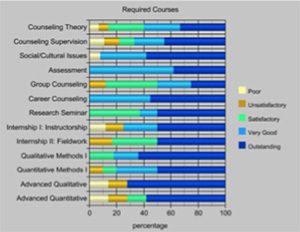
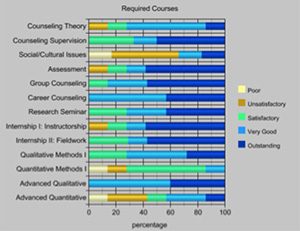
The following graph shows the results of required courses. Most survey respondents reported that the core curriculum was 鈥渧ery good鈥� or 鈥渙utstanding鈥�. Of those who responded to the question, all found the Clinical, Leadership, and Organizational Assessment course and the Career Counseling course to be 鈥渧ery good鈥� or 鈥渙utstanding鈥�. Four areas were rated with a high minority of 鈥減oor鈥� or 鈥渦nsatisfactory鈥� ratings: Counseling Supervision (22%, n=2), Internship I: Instructorship (25%, n=2), Advanced Qualitative Methods (28%, n=2), and Advanced Quantitative Methods (28%, n=2).
II. EXPERIENCES
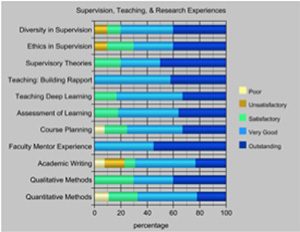
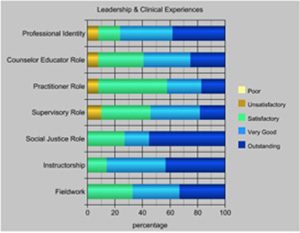
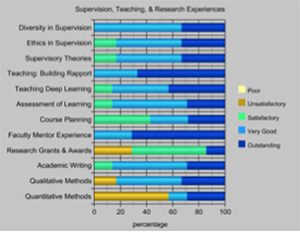
The following two graphs represent students鈥� experiences within supervision, teaching, research, leadership, and clinical components of the program. This cluster of questions constituted most of the CACREP standards of competency in a PhD program. Most of the survey respondents rated these areas as 鈥渙utstanding鈥� or 鈥渧ery good鈥�. All respondents rated the teaching element of building rapport with their students as 鈥渧ery good鈥� or 鈥渙utstanding鈥�, in addition to rating faculty mentorship as 鈥渧ery good鈥� or 鈥渙utstanding鈥�. Three of the fifteen respondents (23%) rated the learning of academic writing skills as 鈥渦nsatisfactory鈥� or 鈥減oor鈥�. The question regarding the quality of grants and awards was not included in the graph, because of a low (80%) nonresponse rate.
III. ADDITIONAL COMPONENTS
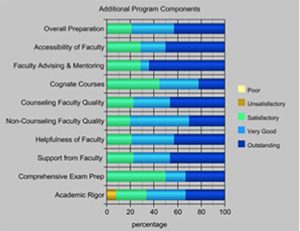
The following graph includes the results of the survey that asked about additional program components. These questions sought to ascertain the students鈥� feelings about being supported, along with questions related to cognate courses and overall impressions of the program. Almost all survey respondents indicated that these areas were 鈥渟atisfactory鈥� or above. Questions about job search assistance (74% nonresponse) and dissertation guidance (80% nonresponse) were omitted from the graph due to low response rates.
IV. CAREER PREPARATION
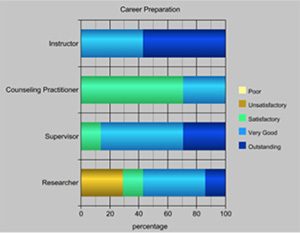
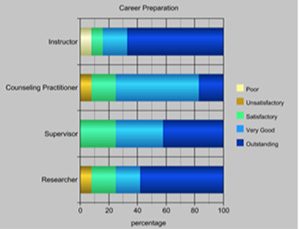
The last graph represents survey questions that explored how students believed that the program helped them to prepare for their careers after graduation. A high percentage of survey respondents indicated that the program helped them in four areas of career preparation.
PhD in Counseling Alumni Survey Results
The 星空无限传媒 University PhD in Counseling program sent a survey to alumni of the program in February 2017, asking 46 questions about the same elements as asked on the student survey. Seven out of 16 total alumni responded to the survey and denoted their rating of the program using a scale with the items: poor, unsatisfactory, satisfactory, and outstanding.
I. REQUIRED COURSES
The first graph shows percentages of the ratings given by alumni of core curriculum courses. Many of the alumni responded with 鈥渧ery good鈥� or 鈥渙utstanding鈥� ratings. All survey respondents rated the Career Counseling course and the Advanced Qualitative Methods course as 鈥渧ery good鈥� or 鈥渙utstanding鈥�. Four of the respondents (67%) indicated that their Social and Cultural Issues in Counseling class was 鈥減oor鈥� or 鈥渦nsatisfactory鈥�. Two respondents (28%) rated their Quantitative Methods I class as 鈥減oor鈥� or 鈥渦nsatisfactory鈥�, with 57% (n=4) rating the course as 鈥渟atisfactory鈥�. Three alumni respondents (43%) (n=3) rated Advanced Quantitative Methods as 鈥減oor鈥� or 鈥渦nsatisfactory鈥�.
II. EXPERIENCES
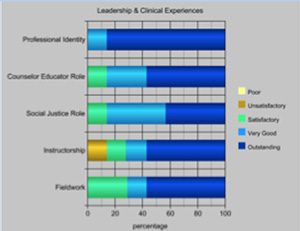
The graphs below show ratings in the experience areas of supervision, teaching, research, leadership, and clinical. Most of the responses were 鈥渧ery good鈥� or 鈥渙utstanding鈥�. All alumni who responded to the survey rated diversity in supervision (cultural responsiveness) as 鈥渧ery good鈥� (67%) or 鈥渙utstanding鈥� (33%). Alumni respondents rated building rapport in teaching as 鈥渧ery good鈥� (33%) or 鈥渙utstanding鈥� (67%). All the respondents indicated that the experience of professional identity was 鈥渧ery good鈥� (14%) or 鈥渙utstanding鈥� (86%). Two survey respondents (29%) indicated that the grants and awards experience of the program was 鈥渦nsatisfactory鈥�. Four respondents (57%) rated the experience of learning and applying quantitative methods as an 鈥渦nsatisfactory鈥� part of the program.
III. ADDITIONAL COMPONENTS
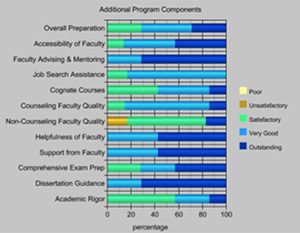
The next graph highlights additional program components. A clear majority of the factors were rated as at least 鈥渟atisfactory鈥�. All the alumni respondents noted that faculty advising/mentoring, helpfulness of faculty, support from faculty, and dissertation guidance were 鈥渧ery good鈥� or 鈥渙utstanding鈥� facets of the PhD program.
IV. CAREER PREPARATION
The last graph portrays the ratings given by alumni respondents about how the program fostered their careers. All respondents rated their career preparation as an instructor to be 鈥渧ery good鈥� or 鈥渆xcellent鈥�. Two alumni respondents (29%) rated their preparation as researchers to be 鈥渦nsatisfactory鈥�.